The doughnut is one of those products that has become part of our everyday lives. We’re used to finding them at breakfast, in cafés, and filling entire supermarket shelves around the world. However, few people know that this small, sweet ring has a history spanning several centuries and has evolved to the point that its production and packaging pose a genuine challenge to the food industry today.
From Dutch fried dough to the symbol of the American breakfast
We tend to associate doughnuts with the American diet. However, its most likely predecessor is the Dutch olykoek (literally, “oily cake”), a ball of sweet fried dough that Dutch settlers brought to New Amsterdam (present-day New York) in the 17th century. It was made without the characteristic central hole for nearly two centuries until, according to tradition, a young sailor pierced the dough in 1847 to achieve more even cooking.
The next significant development occurred during World War I: In 1917, Salvation Army volunteers, known as the “Doughnut Lassies”, fried doughnuts for American soldiers in the French trenches – a tradition that has been officially celebrated as National Doughnut Day since 1938. The invention of the first automatic manufacturing machines in the 1920s then triggered its large-scale commercialization.
In Spain, the story has a name of its own. In 1962, Catalan businessman Andreu Costafreda founded the Donut Corporation Española, the origin of the well-known Panrico brand. After discovering the product in the United States, he returned and registered the “Donuts” trademark, establishing it as a benchmark for the Spanish market.
The doughnut: A product with its own accent in every country
Like with biscuits, doughnuts have evolved differently depending on the region, adapting to local ingredients and tastes. Examples include the Polish pączek filled with rosehip jam, the Portuguese malasada that made its way to Hawaii, the German Berliner filled with jam (known as krapfen in Austria), and the Italian bombolone typical of Tuscany. These filled, fried buns – with or without a hole – seem to be omnipresent across international gastronomy.
Although North America accounts for more than half of global doughnut consumption and remains the dominant region, according to various market reports, Europe follows closely behind, and the Asia-Pacific region continues to grow.
Ever more flavours, textures and formats
The global reach of the doughnut comes with challenges, especially when it comes to keeping pace with shifting market trends. In recent years, we’ve seen:
- Seasonal flavors and limited editions: Chains such as Krispy Kreme launching seasonal ranges inspired by classic desserts or cartoons to build anticipation and drive impulse purchases.
- Hybrid formats: The cronut, the mochi doughnut and filled long johns combine the textures of pastries, and glutinous doughs with the traditional doughnut format.
- Mini doughnuts and bite-sized formats: These respond to the demand for portion control and products designed for sharing or snacking between meals.
- Healthier and “free-from” options: Gluten-free, vegan, low-sugar, and reduced-fat options are moving beyond niche status to become standard offerings from manufacturers and chains.
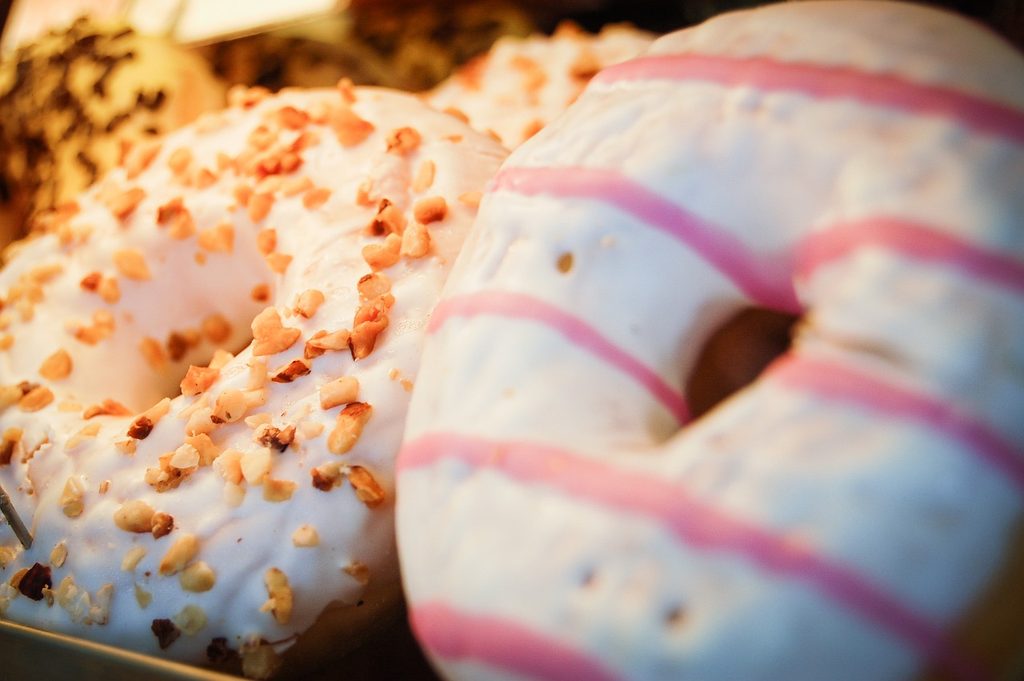
- More elaborate fillings and toppings: Creams, jams, colored glazes, and crunchy toppings add complexity to the production process.
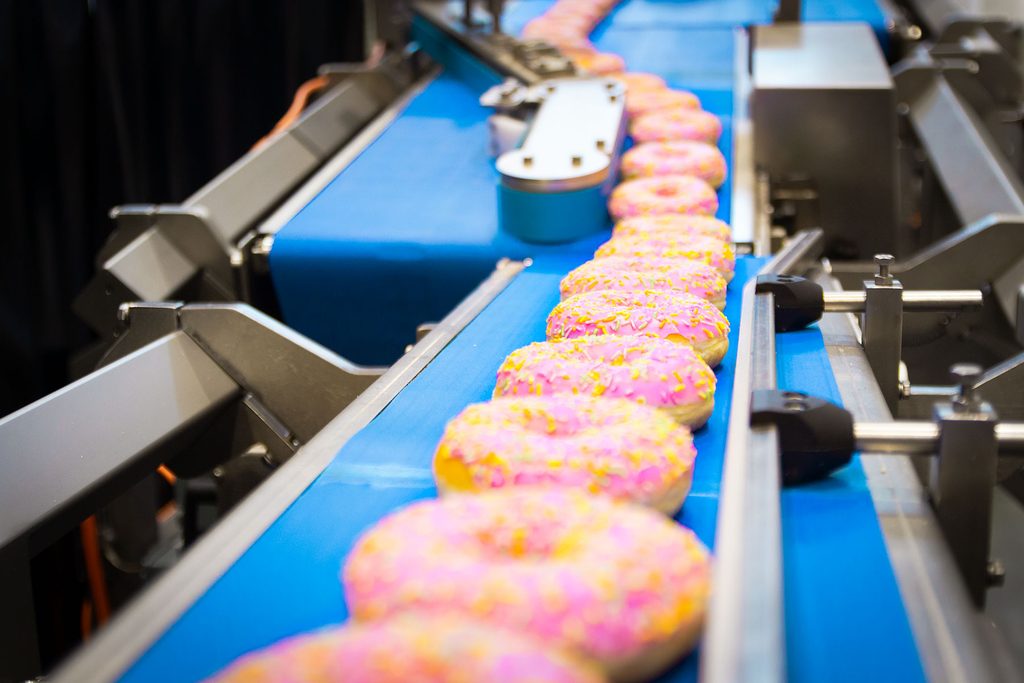
New doughnuts, new packaging challenges
The variety of formats, textures, and fillings translates into very specific packaging challenges:
- The doughnut is a delicate product with crumbs that squish easily, so rough handling can compromise their appearance.
- Glazes, chocolate coatings, and toppings can stick to machine surfaces or to the packaging itself if the handling systems aren’t specifically designed for them.
- Fillings, such as creams and jams, and toppings, must be able to withstand transport and packaging without being damaged or deforming the doughnut or staining the packaging.
- Since doughnuts are fried or baked products with high fat content that may be sold frozen, it’s essential to have packaging that slows oxidation, preserves texture, and prevents condensation.
- For an impulse purchase, the packaging (e.g., trays, window boxes, and blister packs) is almost as important as physical protection.
- From individual units to family packs or assorted boxes with several flavors, packaging lines must adapt to an ever-growing number of formats and product references without compromising production speed.
- Demand for recyclable or compostable packaging materials is also growing in this sector.
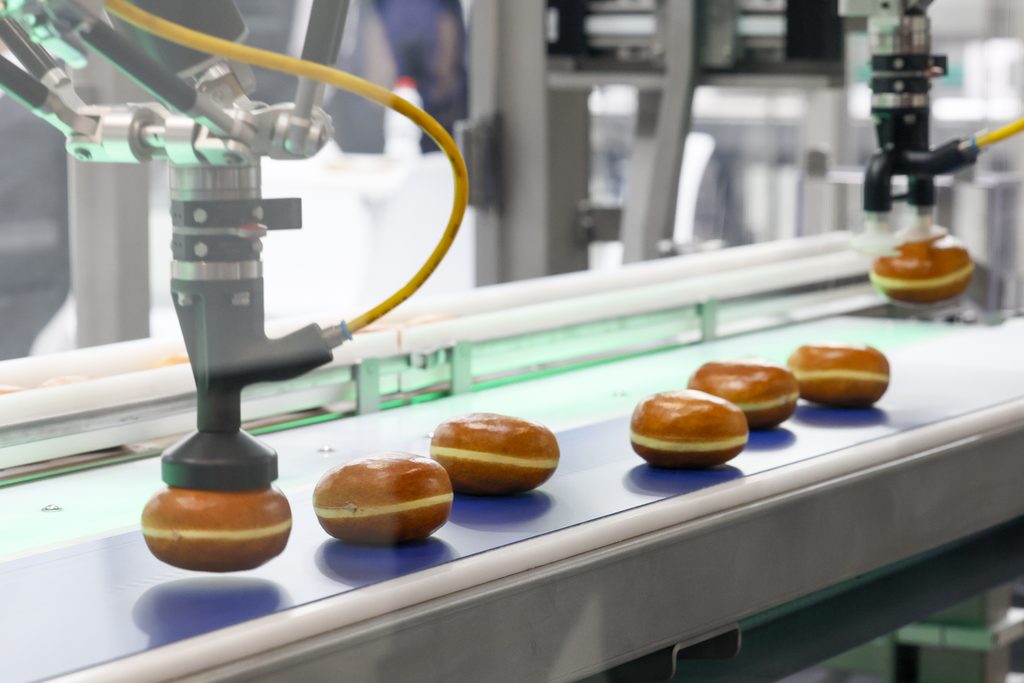
Bespoke automation, the most efficient solution
To overcome these challenges without compromising productivity, doughnut packaging automation leverages solutions that have been successfully implemented for other bakery and pastry products. These solutions are then adapted to the unique requirements of each product:
- Gentle feeding and handling: Continuous feed systems transport doughnuts from the oven, fryer, or freezing tunnel to the packaging line. These systems are designed to arrange and position doughnuts precisely, preventing deformation and ensuring a steady flow into packaging.
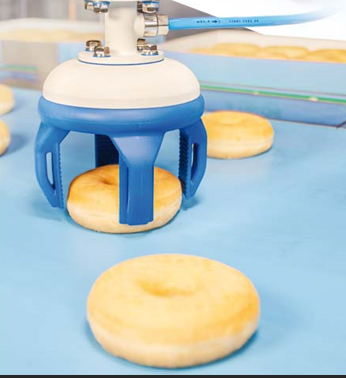
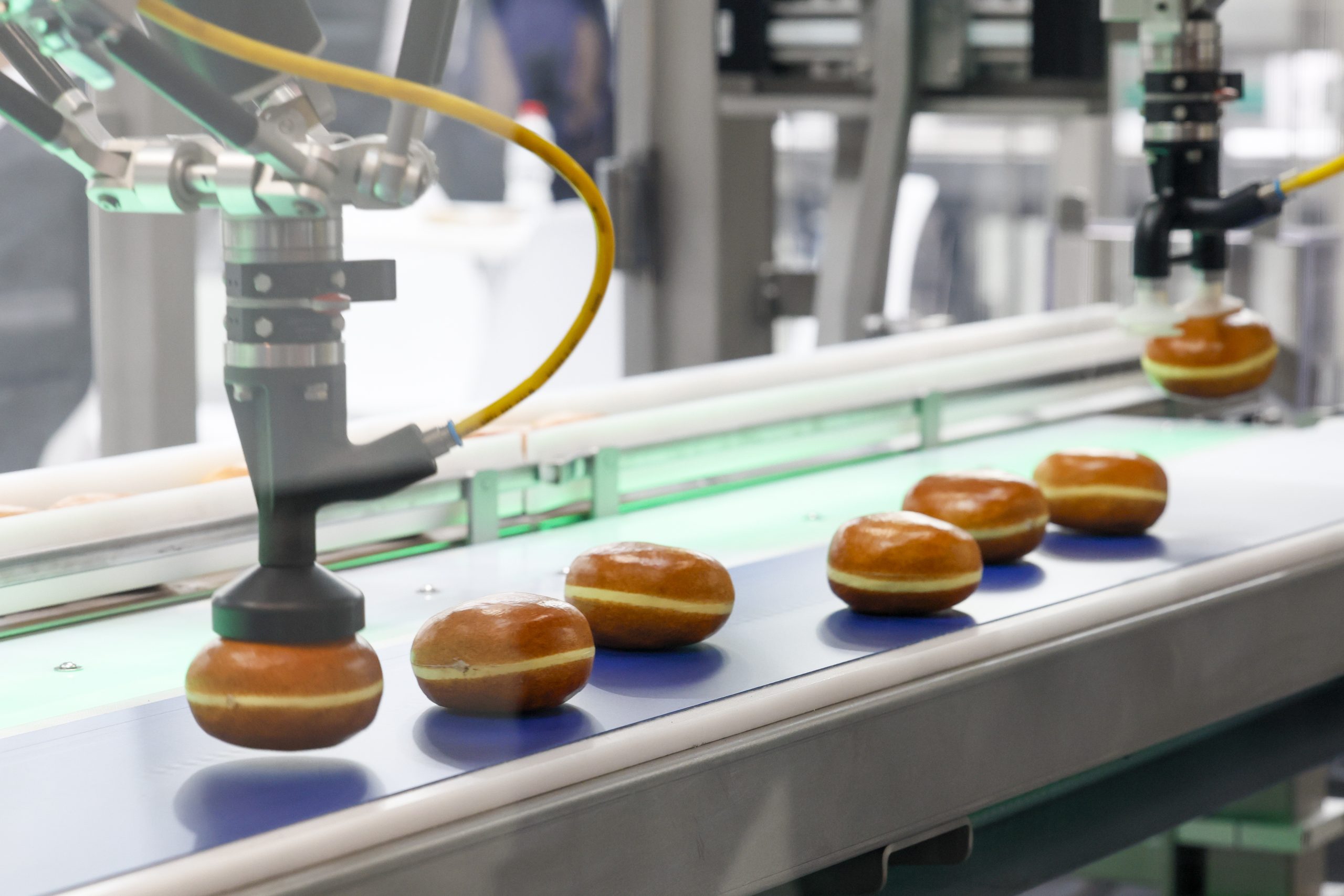
- Machine-vision-guided robots: Picking cells with vision systems that identify each doughnut and Delta robots that pick them up individually or in groups, even with glazes or toppings, and place them onto trays or directly onto the flow-wrap infeed conveyor.
- Custom grippers and handling tools: Vacuum or mechanical handling systems allow doughnuts to be handled gently without marking their surface or damaging their toppings. These systems adapt to different sizes and formats with or without a hole and filled or elongated doughnuts.
- Flow-wrap packaging: Horizontal machines pack doughnuts individually or in groups and create attractive, market-ready packaging that helps preserve quality, texture, and shelf life.
- Cartoning and case-packing: Top-load cartoning systems and case-packing solutions that can group products into various presentation formats, from trays and boxes to bulk orders, adapting to the needs of each production line and distribution channel. Their robust construction makes cleaning and maintenance easier.
- Multi-format flexibility: Modular lines can quickly switch between different product references and presentation formats, such as single units, multi-packs, and assorted boxes, while adapting to different types of packaging without compromising speed or quality.
At ATP Packaging, we have spent 30 years developing robotic packaging lines for fragile, varied-format, high-volume bakery and pastry products, such as doughnuts. Our goal is to ensure that every unit reaches the consumer in the same condition it left the bakery or oven, at the speed that today’s market demands.
Would you like to learn more about our robotic packaging solutions?