Few foods are as universal, and at the same time as simple, as the sandwich: two pieces of bread with something in between. We eat it on trains, at offices, at gas stations, and at kitchen tables. We rarely stop to think that its name comes from an 18th-century English aristocrat, or that behind every packaged sandwich we buy at a supermarket is one of the most demanding production chains in the food industry.
In this article, we explore its history, at some of the curiosities that have made it a global icon, how it is consumed today, and, most importantly, the challenges of its industrial packaging: a fresh, chilled product with a short shelf life and numerous that must reach the shelf looking flawless.
From Hillel’s bread to the Earl’s card table
No one knows who invented the sandwich, because the idea of putting food between bread is probably as old as bread itself. One of the most frequently cited forerunners is Hillel the Elder, a first-century BCE sage who placed paschal lamb and bitter herbs between pieces of matzah. Filled or rolled flatbreads, such as stuffed pita or Turkish döner, have a long tradition in the Mediterranean and the Middle East.
What does have a date, however, is the name. John Montagu, the 4th Earl of Sandwich, was the man behind it. The first documented use of the word dates to November 1762, in a diary describing a group of gentlemen dining on cold meat “or a sandwich” at a London club.
The most widely accepted explanation for the origin of the sandwich is that a minister who worked extremely long days, had it brought to him so he could eat at his desk – not so different from one of its most common uses today. Whatever the truth, the name caught on so quickly that by the mid-19th century, English speakers were already using sandwich as a verb to describe anything placed between two other things.
Two inventions that industrialized it: sliced bread and packaged sandwiches
For nearly two centuries, sandwiches were made at home or in cafés. Its leap into the industrial sector came thanks to two innovations closely linked to machinery and packaging.
The first was sliced bread. In 1928, the Chillicothe Baking Company in Missouri started selling machine-sliced bread, which was made possible by the invention of the automatic bread slicer. Uniform slices and wrapped bread were the perfect basis for producing sandwiches on a large scale.
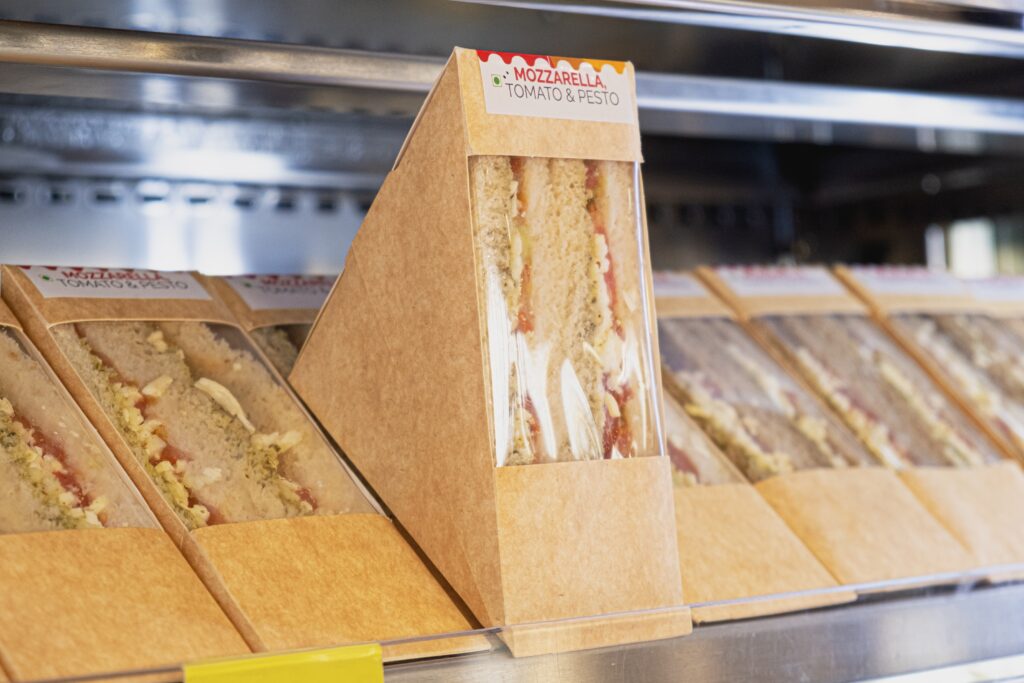
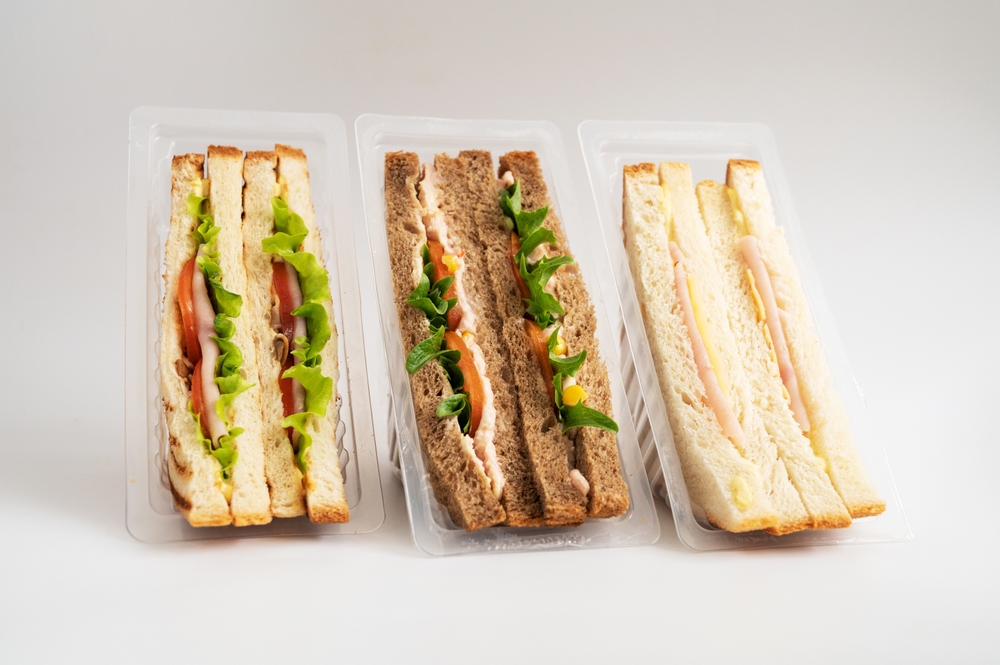
The second innovation occurred in 1980 when Marks & Spencer began selling prepackaged sandwiches in the UK. They were so successful that, by 1982, they were on sale in 140 stores. The best-selling filling, prawn mayonnaise, was introduced in 1981. This cold, grab-and-go sandwich, is the direct ancestor of the wedge-packed sandwiches that dominate European store shelves today.
The sandwich today: king of food to go
Today, the sandwich is the king of the food-to-go market. The UK, the birthplace of the packaged sandwiches, is the benchmark market, with around 4 billion sandwiches bought in shops and food service outlets every year. The industry association itself defines the sandwich broadly as any bread with a cold filling, ranging from classic sliced-bread triangles to baguettes, wraps, and bagels.
In Spain, the category is also experiencing strong growth. Alimarket’s 2025 report on sandwiches and bocadillos shows growth of close to 10% in both value and volume in organized retail. Its 2026 report points to acquisitions, greater investment in production, and an average price exceeding €1 per 100 g.
These sources highlight trends shaping the market:
- Healthier and smaller portions: lighter recipes, tighter portion sizes ,and more carefully balanced nutritional profiles.
- Extra protein: fillings designed for active consumers or those looking for something more filling.
- Hot formats: sandwiches that can be heated in the microwave or oven.
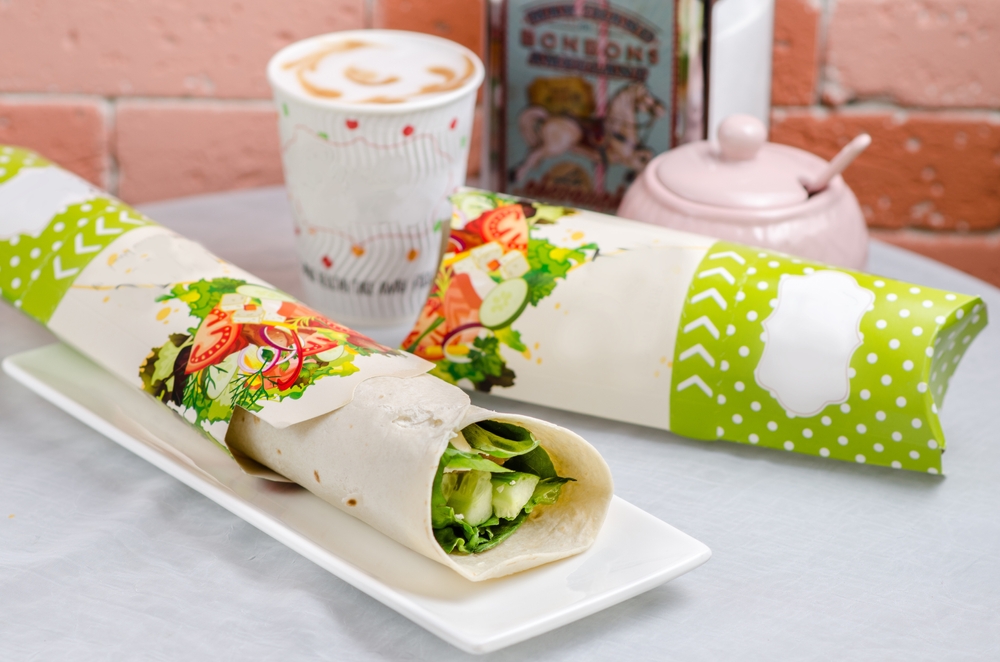
- Wraps: a well-established format that sits alongside the traditional sandwich, broadening the range.
- Plant-based options: in the UK, the growing demand for vegetarian and vegan products is pushing companies in the industry to expand their offerings.
These trends directly impact the factory floor, resulting in wider product ranges, smaller batches, constant format changes, and products that must be on the shelf just a few hours after they are made.
Packaging a sandwich isn’t as simple as it looks
On paper, few things are simpler than two slices of bread and a filling. However, on the packaging line, however, the sandwich presents almost every complication a food product can have:
- Freshness with a very short use-by date. It is a ready-to-eat product made with fresh ingredients and no further treatment. Its shelf life depends on four factors: high-quality raw materials, hygienic processing, packaging material with the right gas permeability, and an unbroken cold chain.
- Protective atmosphere and flawless seals. Many manufacturers use modified atmosphere packaging (MAP) to extend shelf life. However, this technology requires a perfect seal and materials with the right barrier properties.
- Soft product that is never the same twice. Examples include spongy bread, moist fillings, sauces, salad leaves, and so on. Each recipe behaves differently, and all of them deform easily. Therefore, any handling must be gentle to avoid squashing or pulling apart the product.
- Moisture, bread’s greatest enemy. Stopping the filling from soaking into the bread partly depends on the recipe, but the packaging also plays a role. Condensation or a poor seal speeds up deterioration.
- Allergens and traceability. With so many ingredients per product, accurate labeling is a matter of safety. Throughout the European Union, Regulation (EU) No 1169/2011, effective since December 13, 2014, requires highlighting the 14 mandatory allergens on the label.
- Packaging under regulatory scrutiny. The classic cardboard sleeve with a plastic window is difficult to recycle unless the materials are separated. Since August 12, 2026, Regulation (EU) 2025/40 on packaging and packaging waste (PPWR) has generally applied. The regulations covers all packaging placed on the EU market and sets out a roadmap towards greater recyclability, more recycled content, and less packaging.
- We eat with our eyes. Nobody buys a sandwich without seeing it first. A clean cut and a well-displayed filling carry as much weight in the purchasing decision as the price. The package must also open easily.
- A constantly rotating range. Seasonal recipes, single units, multipacks and meal deals mean frequent format changes. Each changeover must happen without losing pace or compromising hygiene.
Which processes can be automated, and which technology is best suited for them?
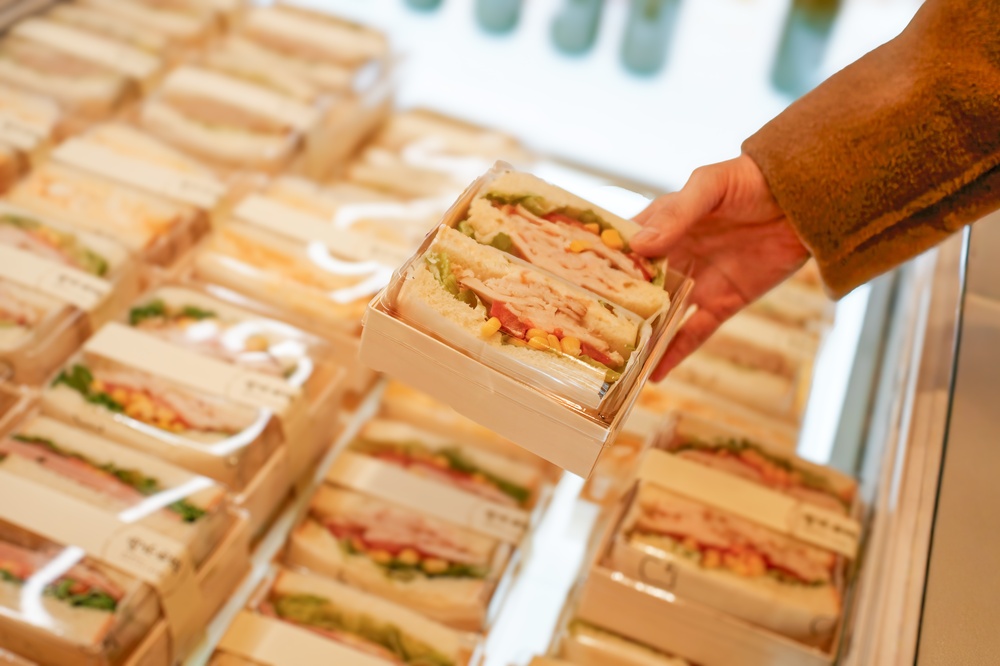
Automation remains one of the biggest challenges for the food industry, particularly in the packaging and end-of-line processes. The following are the most widely used technologies in the industrial production of sandwiches and prepared foods:
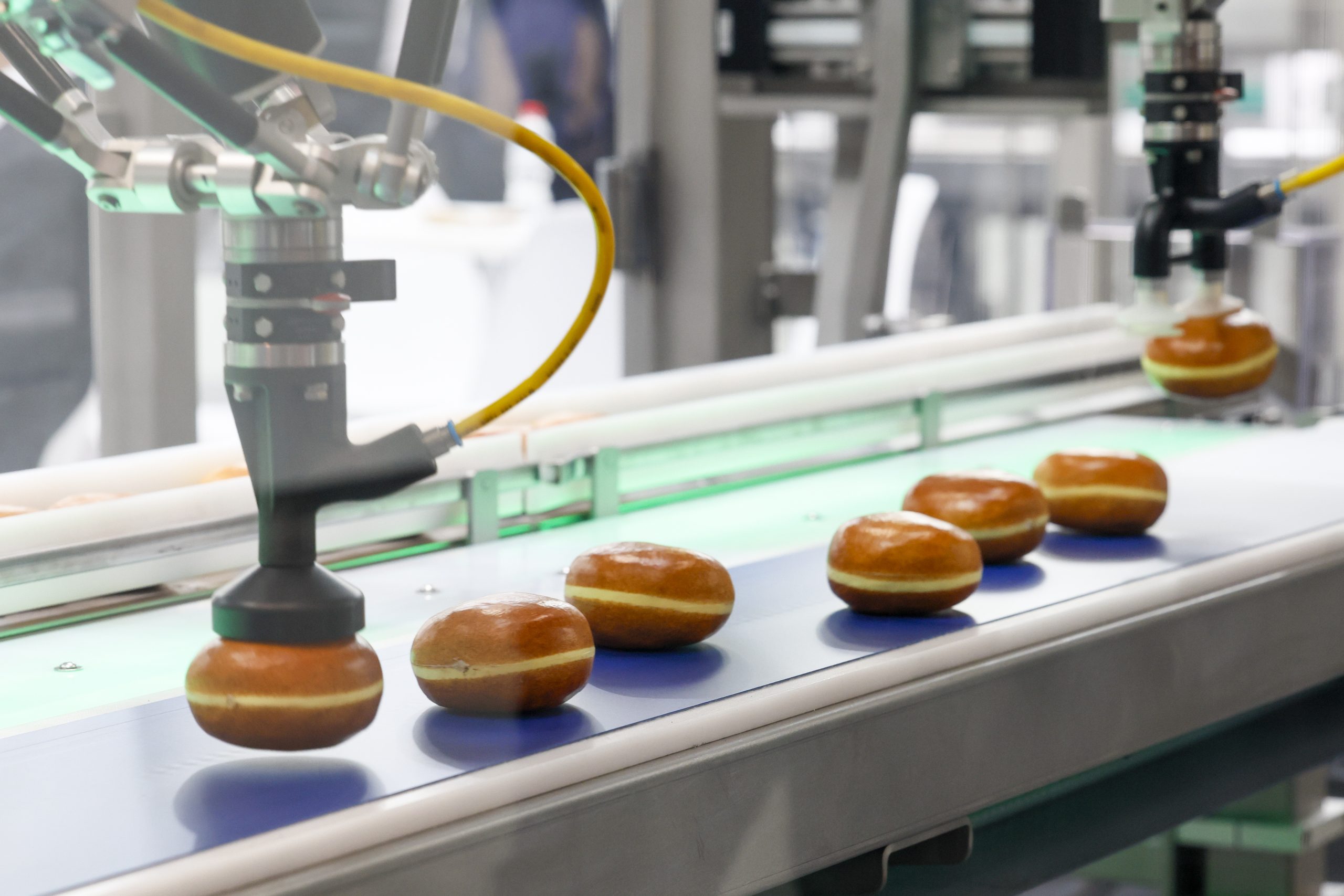
- Machine vision for picking. A camera identifies the position and orientation of each item on the conveyor belt, even when it arrives offset or rotated. The vision system then passes this information to the robot, which picks up the product and places it in the tray, the carton or the infeed of the packaging machine. Automating this process reduces manual handling and improves hygiene.
- Gripping systems designed for soft products. The robot’s tooling must hold the product without crushing the bread or displacing the filling. Suction cups, mechanical grippers, and other gripping systems are used for this, adapted to the texture, weight and shape of each product. The ability to change or adjust this tooling makes switching between formats easier, such as from triangular sandwiches, to baguettes, and wraps.
- Flow wrapping with modified atmosphere. Horizontal form-fill-seal (HFFS) machines use heat-sealable film to wrap sandwiches, bocadillos, and wraps. Some models have gas-flushing systems for modified atmosphere packaging (MAP), which extends the product’s shelf life. Both the machine and the packaging materials must be capable of producing a hermetic seal for this to work.
- Cartons: cartoning and closing. Top-load cartoners form, fill, and close cardboard packs. These technologies make it possible to introduce cardboard packaging alternatives in line with the drive to reduce plastic use.
- In-line inspection. Machine vision systems verify that the product is correctly positioned, that the label corresponds to the product, and that there are no visible defects on the package or in the sealing area. These checks help detect errors in presentation and labeling, as well as potential issues with allergen identification. However, checking pack integrity requires additional specific tests.
- Multi-format end of line. Automatic case packing and palletizing systems group products into different case types and order configurations. The flexibility of this equipment and the speed of format changes are essential for working with a wide range of products and smaller production batches.
- Easy to clean, quick to change over. Accessible surfaces and components that are easy to clean and maintain simplify hygiene tasks. Quick adjustment and changeover systems allow the line to adapt to different products without unnecessarily long downtime.
The sandwich is a good example of what we at ATP Packaging have been doing since 1996: bringing automation to delicate, fast-moving products. We design and build complete packaging lines that integrate vision-guided robotic packaging, cartoning, case packing, and palletizing. Do you produce sandwiches, bocadillos, or wraps, and are you considering automating your end of line process? Tell us about your project and we’ll look at it together.